Introduction – Why Early Diagnosis Matters
The cervical spine, located in the neck region, plays an important role in supporting the head and allowing flexible movement. Between each cervical vertebra lies a soft disc that acts as a cushion and helps absorb shock.
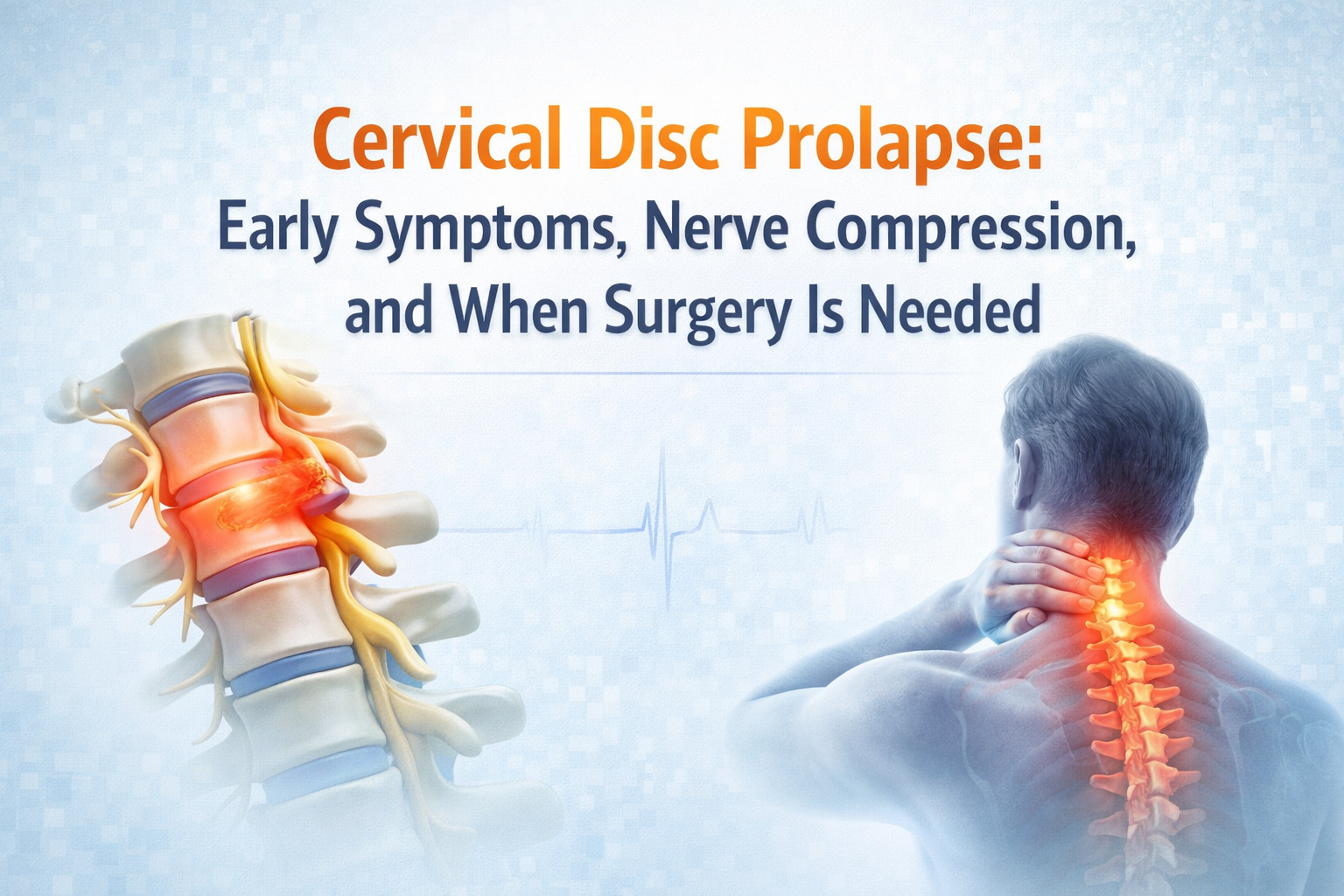
A cervical disc prolapse occurs when the inner portion of the disc pushes outward and compresses nearby nerves. This can lead to neck pain, radiating arm pain, numbness, or weakness. Because early symptoms may resemble routine muscle strain, many patients delay seeking medical advice.
As an experienced Spine Surgeon in Vadodara, Dr. Vinay M. Rohra highlights that early diagnosis and proper treatment can prevent worsening nerve damage and help patients return to normal activities.
Understanding Cervical Disc Prolapse
A cervical disc prolapse, also known as a slipped disc in the neck, occurs when the protective outer layer of a disc weakens and the inner material bulges or ruptures.
This condition may develop due to:
- Age-related disc degeneration
• Repetitive neck strain
• Poor posture or prolonged screen use
• Sudden injury or trauma
When the disc presses on nearby nerves, it may cause pain that travels from the neck into the shoulder or arm.
A qualified Spine Surgeon in Vadodara evaluates the severity of nerve compression before recommending treatment.
Symptoms You Should Not Ignore
Symptoms vary depending on the location and severity of nerve compression.
Common symptoms include:
- Persistent Neck Pain
- Pain Radiating to Shoulder or Arm
- Tingling or Numbness in Fingers
- Muscle Weakness in Arms
- Reduced Neck Mobility
- Headaches Associated with Neck Pain
In severe cases, nerve compression can affect coordination or grip strength.
Diagnosis and Imaging
Accurate diagnosis involves a combination of clinical evaluation and imaging studies.
Diagnostic tests may include:
- Neurological Examination – Evaluates muscle strength and reflexes
- MRI Scan of the Cervical Spine – Detects disc prolapse and nerve compression
- CT Scan or X-rays – Helps assess bone alignment
- Electrodiagnostic Tests (if required) to evaluate nerve function
These tests help determine the best treatment approach.
Treatment Options
Treatment depends on symptom severity and response to initial care.
Conservative Management
Many patients improve with non-surgical treatment such as:
- Pain-relieving and anti-inflammatory medications
• Physiotherapy and posture correction
• Activity modification
• Cervical traction or supportive collar
Surgical Intervention
Surgery may be considered if:
- Pain persists despite conservative treatment
• Progressive nerve weakness develops
• Severe nerve compression affects daily activities
Common procedures include:
- Anterior cervical discectomy
• Cervical disc removal with fusion
• Minimally invasive decompression techniques
An experienced Spine Surgeon in Vadodara selects the most suitable procedure to relieve nerve pressure and restore spinal stability.
Post-Treatment Care and Recovery
Recovery typically involves:
- Gradual return to normal activities
- Physiotherapy to strengthen neck muscles
- Ergonomic adjustments for work and posture
- Regular follow-up appointments
Adopting healthy posture habits and spine care practices helps prevent recurrence.
When to Consult a Neurosurgeon in Vadodara
Seek specialist evaluation if you experience:
- Persistent neck pain lasting several weeks
- Pain radiating to the arm or shoulder
- Numbness or weakness in the arm or hand
- Difficulty performing daily activities
Early consultation with a trusted Spine Surgeon in Vadodara ensures proper diagnosis and timely treatment.
Meet Dr. Vinay M. Rohra – Spine Surgeon in Vadodara
Dr. Rohra combines expertise, precision, and patient-focused care for complex spine problems:
- Personalized Treatment Plans: Tailored to structural conditions and lifestyle
- Advanced Techniques: Minimally invasive surgery, spinal fusion, and decompression
- Comprehensive Rehabilitation: Post-treatment guidance for optimal recovery
Education & Experience:
- M.B.B.S., M.S., M.Ch (Neurosurgery) – Vadilal Sarabhai General Hospital, Ahmedabad
- Specialist in degenerative spine disorders, structural abnormalities, and spinal surgery
Patients trust Dr. Rohra for his precision, experience, and compassionate care.
Conclusion
Cervical disc prolapse is a common spine condition that can significantly affect daily life if left untreated. Early recognition of symptoms and proper medical evaluation are essential for preventing long-term nerve damage.
If neck pain or arm symptoms persist, consult an experienced Spine Surgeon in Vadodara for accurate diagnosis and effective treatment.
Frequently Asked Questions
It usually occurs due to age-related degeneration, poor posture, or sudden injury.
Yes, many patients improve with conservative treatment such as medication and physiotherapy.
MRI of the cervical spine is the most reliable diagnostic test.
Recovery time varies depending on treatment type and severity of nerve compression.
If neck pain is associated with arm pain, numbness, or weakness, early specialist consultation is recommended.