Introduction – Why Early Diagnosis Matters
The craniovertebral junction (CVJ) is the complex region where the skull meets the upper cervical spine. This area supports the head and protects vital neurological structures such as the brainstem and upper spinal cord. Even small abnormalities in this region can affect essential functions like breathing, balance, and movement.
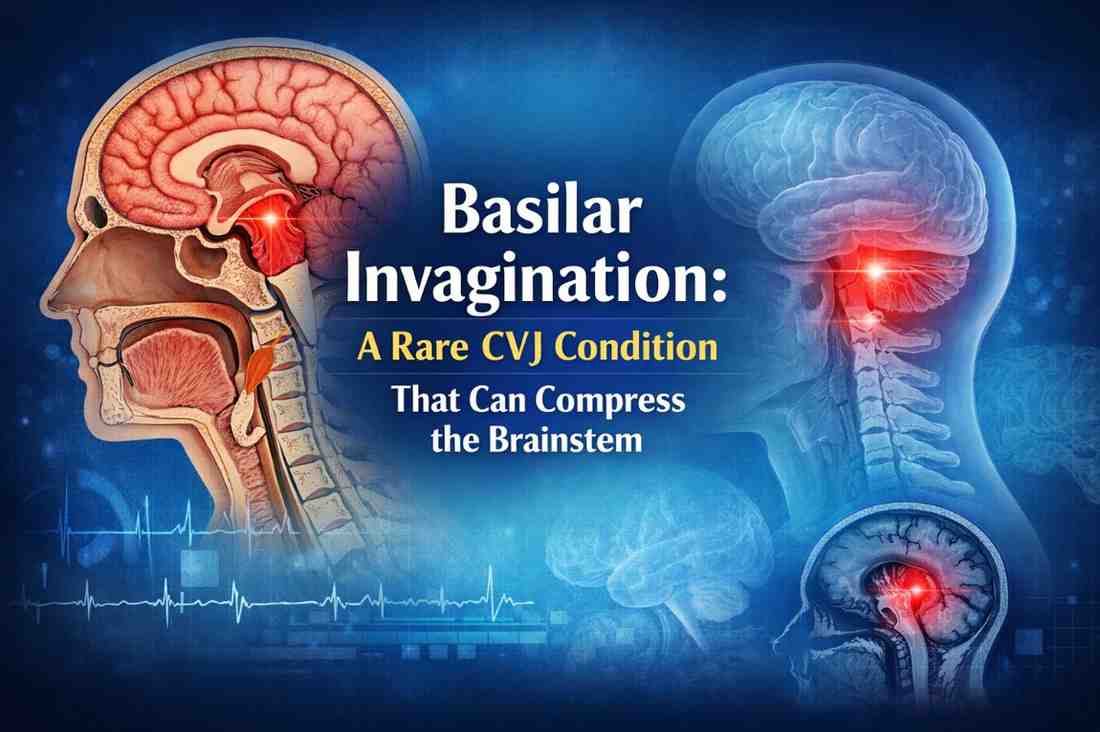
Basilar invagination is a rare structural condition in which the upper part of the cervical spine moves upward into the base of the skull. This abnormal alignment can compress the brainstem or spinal cord, leading to progressive neurological symptoms if not treated in time.
Because the symptoms often develop gradually, many patients initially ignore them or attribute them to routine neck pain or dizziness. As an experienced Neurosurgeon in Vadodara, Dr. Vinay M. Rohra emphasizes that early evaluation and imaging are crucial for preventing long-term neurological complications.
Understanding Basilar Invagination
Basilar invagination occurs when the upper vertebrae of the spine move upward toward the skull base. This abnormal positioning can narrow the space available for the brainstem and spinal cord.
The condition may occur due to:
- Congenital abnormalities affecting the CVJ region
- Bone disorders such as rheumatoid arthritis or osteoporosis
- Trauma or injury to the upper cervical spine
- Degenerative changes in the spine over time
In some individuals, basilar invagination may be associated with other CVJ anomalies such as atlantoaxial instability or Chiari malformation. Careful evaluation is necessary to determine the exact cause and treatment strategy.
A qualified Neurosurgeon in Vadodara evaluates spinal alignment, nerve compression, and neurological symptoms before recommending treatment.
Symptoms You Should Not Ignore
Symptoms may develop slowly and worsen as pressure on the brainstem increases.
Common warning signs include:
- Persistent Neck Pain or Stiffness
- Headaches at the Back of the Head
- Balance Problems or Difficulty Walking
- Numbness or Weakness in Arms or Legs
- Difficulty Swallowing or Speaking
- Dizziness or Coordination Problems
In advanced cases, severe brainstem compression may cause breathing difficulty or significant neurological impairment.
Recognizing these symptoms early allows timely evaluation and treatment.
Diagnosis and Imaging
Accurate diagnosis is essential for safe management of CVJ disorders.
Evaluation usually includes:
- Neurological Examination – Assessment of strength, reflexes, and coordination
- MRI Scan – Identifies brainstem compression and soft tissue structures
- CT Scan – Provides detailed information about bone alignment
- Dynamic Imaging – Helps identify instability in the craniovertebral junction
These investigations help determine whether conservative management or surgical stabilization is required.
Treatment Options
Treatment depends on symptom severity, spinal stability, and degree of neural compression.
Conservative Management
Mild cases without major neurological symptoms may be managed with:
- Pain-relieving medications
• Activity modification
• Cervical support or physiotherapy
• Regular monitoring with imaging
Surgical Intervention
Surgery may be recommended when:
- Brainstem or spinal cord compression is present
• Progressive neurological symptoms develop
• Significant CVJ instability is detected
Surgical procedures may include:
- Posterior fixation and fusion to stabilize the craniovertebral junction
• Decompression surgery to relieve pressure on the brainstem
• Occipitocervical fixation in complex cases
An experienced Neurosurgeon in Vadodara carefully plans surgery to restore alignment and protect neurological function.
Post-Treatment Care and Recovery
Recovery depends on the severity of compression and the type of surgical procedure performed.
Post-treatment care typically involves:
- Close neurological monitoring
- Gradual mobilization and rehabilitation
- Physiotherapy to improve strength and balance
- Regular imaging follow-ups
- Long-term monitoring of spinal stability
Early rehabilitation helps patients regain mobility and maintain spinal health.
When to Consult a Neurosurgeon in Vadodara
Seek medical evaluation if you experience:
- Persistent neck pain with neurological symptoms
- Progressive weakness or numbness in limbs
- Balance problems or frequent falls
- Difficulty swallowing or coordination issues
- Headaches associated with neck stiffness
Early consultation with a qualified Neurosurgeon in Vadodara ensures timely diagnosis and appropriate treatment.
Meet Dr. Vinay M. Rohra – Neurosurgeon in Vadodara
Dr. Rohra combines expertise, precision, and patient-focused care for complex spine problems:
- Personalized Treatment Plans: Tailored to structural conditions and lifestyle
- Advanced Techniques: Minimally invasive surgery, spinal fusion, and decompression
- Comprehensive Rehabilitation: Post-treatment guidance for optimal recovery
Education & Experience:
- M.B.B.S., M.S., M.Ch (Neurosurgery) – Vadilal Sarabhai General Hospital, Ahmedabad
- Specialist in degenerative spine disorders, structural abnormalities, and spinal surgery
Patients trust Dr. Rohra for his precision, experience, and compassionate care.
Conclusion
Basilar invagination is a rare but potentially serious craniovertebral junction disorder that can affect the brainstem and spinal cord. Early diagnosis and proper evaluation are essential to prevent neurological complications.
If you experience persistent neck pain or progressive neurological symptoms, consult an experienced Neurosurgeon in Vadodara for accurate diagnosis and advanced treatment options.
Frequently Asked Questions
It is a structural abnormality where the upper cervical spine moves upward toward the skull base, potentially compressing the brainstem.
If untreated, it can cause neurological problems due to brainstem compression.
MRI and CT scans are the main imaging tests used to evaluate the craniovertebral junction.
Not always. Mild cases may be monitored, but surgery may be recommended if symptoms worsen.
If you have persistent neck pain, balance problems, or neurological symptoms, early specialist evaluation is recommended.