Introduction – Why Early Diagnosis Matters
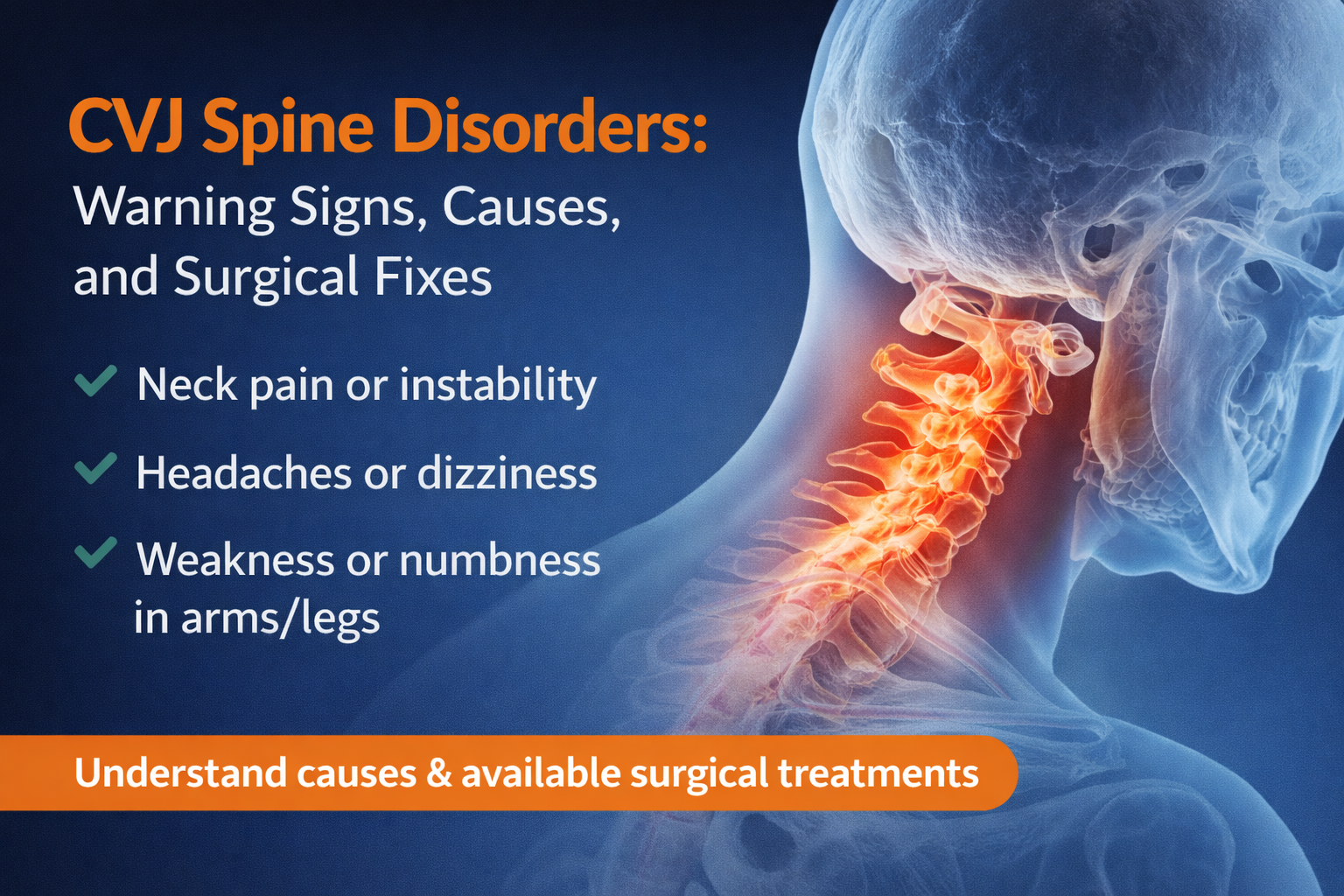
The cranio vertebral junction (CVJ) is the critical area where the skull meets the upper cervical spine. Structural abnormalities here, known as CVJ anomalies, can compress the brainstem, spinal cord, or nerves, leading to serious neurological complications.
Early detection and treatment are essential to prevent permanent neurological damage, improve quality of life, and restore stability. Consulting a skilled Spine Surgeon in Vadodara ensures precise diagnosis and effective intervention.
Understanding CVJ Spine Disorders
CVJ spine disorders involve structural or functional problems at the junction between the skull and the top cervical vertebrae. These abnormalities can be congenital, traumatic, or acquired, and may affect balance, mobility, and neurological function.
Common causes include:
- Congenital Defects: Basilar invagination, atlantoaxial instability
- Trauma: Injuries to the upper cervical spine
- Infections or Inflammatory Disorders: Such as rheumatoid arthritis
- Tumors: Growths impacting the craniovertebral region
Understanding the underlying cause helps a Spine Surgeon in Vadodara tailor the safest and most effective treatment plan.
Symptoms You Should Not Ignore
Early recognition of CVJ spine disorders is crucial. Symptoms may include:
- Neck pain and stiffness
- Headaches, especially at the back of the head
- Weakness, numbness, or tingling in the arms or legs
- Difficulty swallowing or speaking
- Loss of balance or coordination
- Breathing difficulties in severe cases
If these symptoms persist or worsen, consult a Brain Surgeon in Vadodara promptly. Early intervention can prevent irreversible nerve damage.
Diagnosis and Imaging
Accurate diagnosis is key for effective management:
- Imaging Studies: MRI, CT scans, and X-rays provide detailed visualization of the CVJ
- Neurological Examination: Assesses motor strength, sensation, and reflexes
- Dynamic Imaging: Detects instability during movement
These assessments allow a Brain Surgeon in Vadodara to create a personalized treatment plan addressing both structural and neurological concerns.
Treatment Options
Treatment depends on severity, symptoms, and underlying cause.
- Non-Surgical Management
- Medications: Pain relievers and anti-inflammatory drugs to manage discomfort
- Cervical Bracing: Stabilizes the CVJ and limits harmful movement
- Surgical Interventions
- Posterior Fusion: Stabilizes the CVJ using screws and rods
- Decompression Surgery: Removes bone or tissue compressing the brainstem or spinal cord
- Occipitocervical Fixation: Fuses the skull base to the cervical spine for long-term stability
A Brain Surgeon in Vadodara ensures that surgery is performed with precision, minimal risk, and optimal recovery outcomes.
Post-Treatment Care and Recovery
Recovery after CVJ surgery involves:
- Post-Surgical Care: Wound management and pain control
- Physical Therapy: Gradual strengthening and mobility exercises to restore function
- Neurological Monitoring: Regular follow-ups to assess recovery and prevent complications
Comprehensive post-treatment care is crucial for long-term spine stability and neurological health.
When to Consult a Brain Surgeon in Vadodara
Immediate consultation is advised if you experience:
- Persistent or worsening neck pain
- Weakness, numbness, or loss of coordination
- Difficulty swallowing, speaking, or breathing
- Headaches at the back of the head
Early evaluation by a Brain Surgeon in Vadodara allows timely treatment and minimizes the risk of permanent neurological damage.
Meet Dr. Vinay M. Rohra – Brain Surgeon in Vadodara
Dr. Rohra combines expertise, precision, and patient-centered care in managing CVJ spine disorders:
- Personalized treatment plans including non-surgical and surgical options
- Advanced surgical techniques such as posterior fusion and occipitocervical fixation
- Comprehensive rehabilitation and post-treatment support
Education & Experience:
- M.B.B.S., M.S., M.Ch (Neurosurgery) – Vadilal Sarabhai General Hospital, Ahmedabad
- Specialist in complex spine surgery, CVJ disorders, and craniovertebral anomalies
Patients choose Dr. Rohra for his skill, precision, and compassionate approach.
Conclusion
CVJ spine disorders can affect mobility, neurological function, and quality of life. Early consultation with a Brain Surgeon in Vadodara ensures accurate diagnosis, personalized treatment, and safe recovery.
Book an appointment with Dr. Vinay M. Rohra today to take the first step toward a healthy, stable spine.
Frequently Asked Questions
Structural abnormalities at the junction between the skull and upper cervical spine that may compress the brainstem or spinal cord.
Congenital defects, trauma, infections or inflammatory disorders like rheumatoid arthritis, and tumors.
Neck pain, headaches, limb weakness or numbness, difficulty swallowing, loss of balance, and breathing difficulties.
Through MRI, CT scans, X-rays, dynamic imaging, and neurological examinations.
Non-surgical management (medications, bracing) and surgical interventions (posterior fusion, decompression, occipitocervical fixation).
If you have persistent pain, neurological deficits, swallowing difficulties, or balance issues, seek early consultation.