Introduction – Why Early Diagnosis Matters
The cerebello pontine angle (CPA) is a critical area where the cerebellum and pons meet, playing a major role in balance, coordination, and hearing. Tumours in this region, though rare, can impact essential neurological functions if not detected early.
CPA tumours, most commonly acoustic neuromas, may develop slowly, making early recognition and treatment crucial. As a leading Brain Surgeon in Vadodara, Dr. Vinay M. Rohra emphasizes that timely consultation allows precise diagnosis, appropriate intervention, and improved outcomes, ensuring patients maintain quality of life.
Understanding CPA Brain Tumours
CPA tumours are growths in the cerebellopontine angle, which can affect hearing, facial nerves, and balance. While acoustic neuromas are most common, other types include meningiomas and epidermoid cysts.
Early diagnosis is vital to prevent complications such as progressive hearing loss, facial nerve impairment, or severe balance problems. Small tumours may be monitored, but larger or symptomatic growths often require intervention.
Symptoms You Should Not Ignore
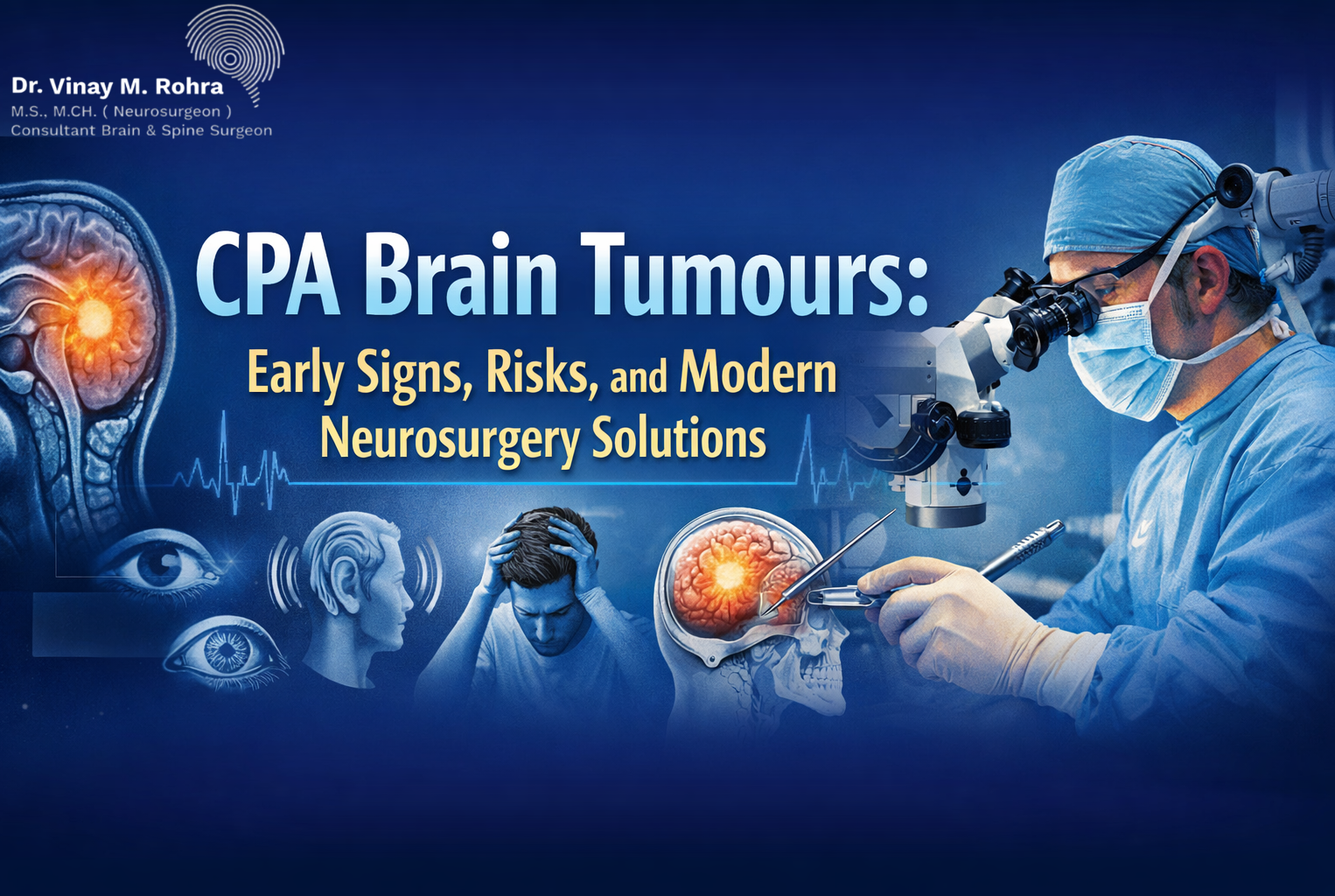
Recognizing early signs of a CPA tumour allows a Brain Surgeon in Vadodara to intervene before complications arise:
- Hearing Loss: Usually in one ear, gradually worsening
- Tinnitus: Persistent ringing or buzzing in the ear
- Balance Issues or Vertigo: Difficulty walking or frequent dizziness
- Facial Numbness or Weakness: Tingling or drooping of facial muscles
- Headaches: Persistent or intensifying headaches
Prompt evaluation is essential, especially if symptoms progress or affect daily activities.
Diagnosis and Imaging
Accurate diagnosis is key for effective treatment. A Brain Surgeon in Vadodara evaluates CPA tumours using:
- Clinical Examination: Assessment of neurological and facial nerve function
- MRI Scans: Gold standard for visualizing CPA tumours
- CT Scans: Used when MRI is not feasible
- Hearing Tests (Audiometry): To check hearing loss and guide treatment
This combination ensures a personalized, precise treatment plan tailored to each patient’s condition.
Treatment Options
Treatment depends on tumour size, growth rate, and symptoms. Options include:
Observation
For small, slow-growing tumours, especially in older patients:
- Regular MRI scans
- Routine hearing tests
- Monitoring symptom progression
Surgical Intervention
Indicated for larger or symptomatic tumours:
- Microsurgical Removal: Precise tumour excision preserving neurological function
- Endoscopic Surgery: Minimally invasive option for select cases
Radiation Therapy
Used to shrink or control tumour growth:
- Stereotactic Radiosurgery (Gamma Knife)
- Fractionated Radiotherapy
Supportive Care
- Physical therapy for balance and coordination
- Hearing aids for persistent hearing loss
Pain management and psychological support
Post-Treatment Care and Recovery
Recovery varies based on tumour type and treatment. Key steps include:
- Gradual Activity Resumption: Light movement and exercises to maintain circulation and flexibility
- Physiotherapy: Strengthening exercises for balance and coordination
- Lifestyle Adjustments: Avoiding activities that worsen symptoms, protecting hearing, and maintaining overall health
- Regular Follow-Up: Monitor for recurrence and assess neurological recovery
Comprehensive post-treatment care ensures better functional outcomes and quality of life.
When to Consult a Brain Surgeon in Vadodara
It’s crucial to seek consultation if you notice:
- Persistent or worsening hearing loss
- Tinnitus affecting daily life
- Balance problems or frequent dizziness
- Facial numbness or weakness
- Headaches that intensify over time
Early intervention with a Brain Surgeon in Vadodara can prevent complications and improve recovery.
Meet Dr. Vinay M. Rohra – Brain Surgeon in Vadodara
Dr. Rohra combines surgical precision with compassionate care, offering:
- Personalized treatment plans for CPA tumours
- Advanced surgical techniques, including microsurgery and endoscopic surgery
- Holistic care focused on recovery and rehabilitation
Education & Experience:
- M.B.B.S., M.S., M.Ch (Neurosurgery) – Vadilal Sarabhai General Hospital, Ahmedabad
- Specialist in brain tumours, cranial nerve disorders, and neurosurgical interventions
Patients trust Dr. Rohra for his expertise, precision, and patient-centered approach.
Conclusion
CPA brain tumours can affect hearing, balance, and facial function. Early consultation with a Brain Surgeon in Vadodara ensures accurate diagnosis, timely treatment, and better recovery outcomes.
Book your appointment with Dr. Vinay M. Rohra today to take the first step toward preserving your neurological health.
Frequently Asked Questions
Q1: What is a CPA brain tumour?
It is a growth in the cerebellopontine angle, potentially affecting hearing, facial nerves, and balance.
Q2: What are the early symptoms?
Hearing loss, tinnitus, balance problems, facial numbness, and headaches.
Q3: How are CPA tumours diagnosed?
Through a neurological exam, MRI or CT imaging, and hearing tests (audiometry).
Q4: What treatment options are available?
Observation, surgical removal (microsurgery or endoscopic), radiation therapy, and supportive care.
Q5: When should I see a Brain Surgeon in Vadodara?
If you experience hearing loss, tinnitus, balance issues, facial numbness, or worsening headaches, consult promptly.
Q6: Is recovery possible after treatment?
Yes, with proper treatment and follow-up, most patients regain balance, facial function, and improve quality of life.