

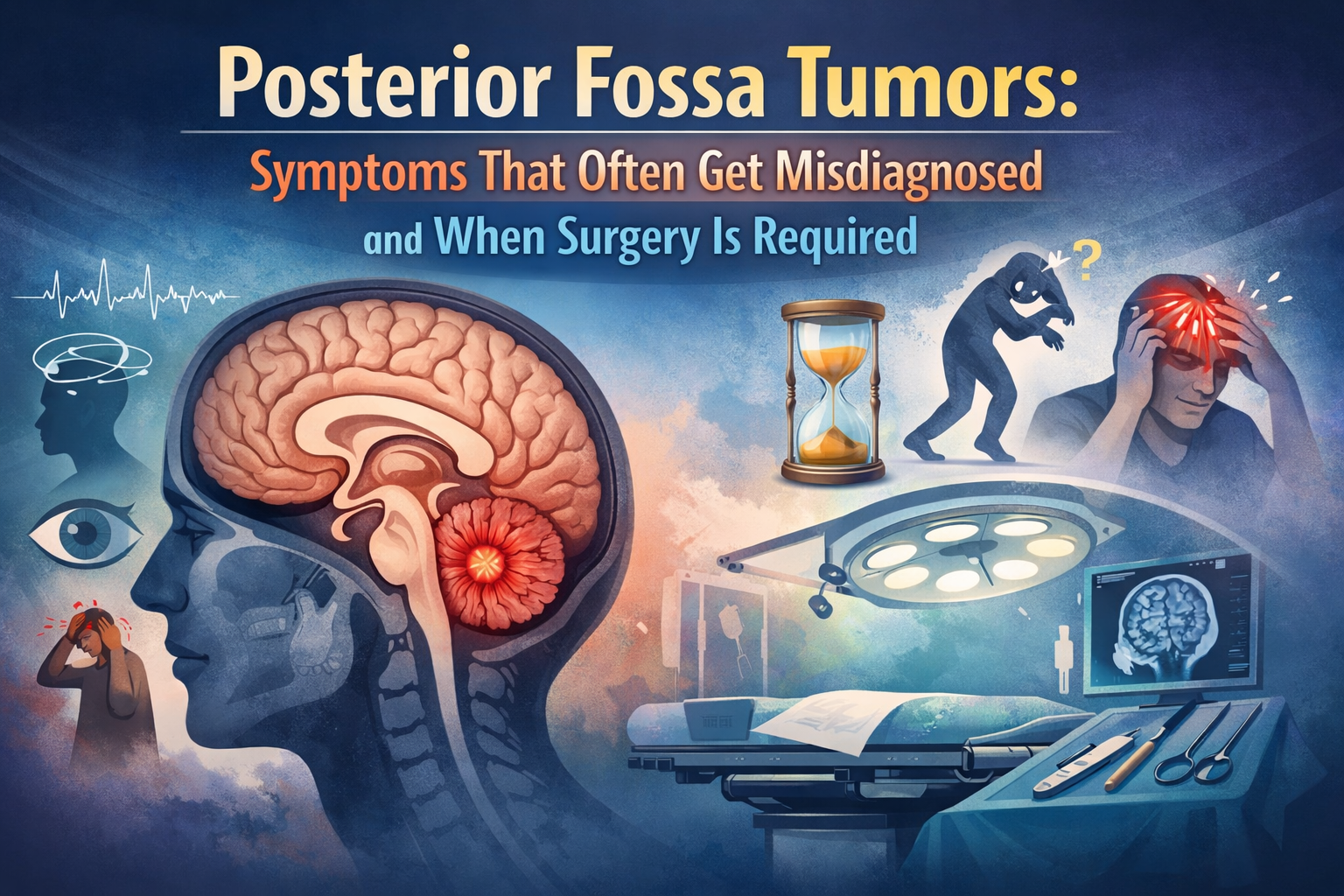
Introduction – Why Early Diagnosis Matters
The posterior fossa is a small but critical area located at the base of the skull. It houses important structures such as the cerebellum and brainstem, which control balance, coordination, breathing, and vital neurological functions. Even small tumors in this region can cause significant symptoms due to limited space.
Posterior fossa tumors are sometimes misdiagnosed in early stages because symptoms like headache, imbalance, or nausea are often attributed to common conditions such as migraine or vertigo. However, delayed diagnosis may allow the tumor to grow and compress essential brain structures.
As an experienced Neurosurgeon in Vadodara, Dr. Vinay M. Rohra emphasizes that timely evaluation and advanced imaging play a crucial role in preventing serious neurological complications.
Understanding Posterior Fossa Tumors
Posterior fossa tumors are abnormal growths that develop in the lower back part of the brain. They may arise from brain tissue itself or surrounding structures. Because this region controls coordination and vital functions, even benign tumors can produce serious symptoms if untreated.
These tumors may affect both children and adults. Some grow slowly, while others may progress more rapidly. The limited space in the posterior fossa makes early detection especially important.
A Neurosurgeon in Vadodara carefully evaluates tumor size, location, and impact on surrounding structures before recommending treatment.
Symptoms You Should Not Ignore
Early symptoms may be subtle but gradually worsen over time:
- Persistent Headache: Often worse in the morning or associated with vomiting
• Balance Problems: Difficulty walking straight or frequent falls
• Nausea and Vomiting: Due to increased intracranial pressure
• Blurred or Double Vision
• Difficulty Swallowing or Slurred Speech
• Weakness or Coordination Issues
Because these signs overlap with other neurological conditions, proper evaluation is essential.
Diagnosis and Imaging
Accurate diagnosis requires detailed neurological assessment and imaging studies:
- Clinical Neurological Examination: Evaluates coordination, reflexes, vision, and balance
- MRI Brain Scan: Gold standard for identifying tumor size and location
- CT Scan: Useful in emergency situations
- Additional Tests: Depending on suspected tumor type
Early imaging helps determine whether surgery or monitoring is appropriate.
Treatment Options
Treatment depends on tumor type, size, symptoms, and overall health.
Conservative Monitoring
Small, slow-growing tumors without major symptoms may be observed with regular imaging.
Surgical Intervention
When symptoms progress or brain structures are compressed, surgery may be necessary:
- Microsurgical Tumor Removal
• Decompression to relieve pressure
• Advanced neuronavigation-guided procedures
An experienced Neurosurgeon in Vadodara selects the safest surgical strategy to preserve neurological function while removing the tumor effectively.
Post-Treatment Care and Recovery
Recovery depends on tumor size and surgical complexity:
- Neurological Monitoring after surgery
• Gradual Mobilization
• Physiotherapy for balance improvement
• Regular MRI follow-up scans
• Supportive rehabilitation if needed
Early rehabilitation improves functional recovery and long-term outcomes.
When to Consult a Neurosurgeon in Vadodara
Seek specialist evaluation if you experience:
- Persistent unexplained headaches
- Ongoing balance problems
- Repeated vomiting without clear cause
- Vision or speech difficulties
- Progressive neurological symptoms
Timely consultation with a qualified Neurosurgeon in Vadodara ensures accurate diagnosis and appropriate management.
Meet Dr. Vinay M. Rohra – Neurosurgeon in Vadodara
Dr. Vinay M. Rohra specializes in advanced brain and spine surgeries with a focus on precision and patient-centered care.
Expertise Includes
- Posterior fossa and CPA tumors
• Brain AVM and aneurysm
• Hydrocephalus and congenital anomalies
• Minimally invasive neurosurgical techniques
Education & Training
- M.B.B.S., M.S., M.Ch (Neurosurgery)
• Vadilal Sarabhai General Hospital, Ahmedabad
Patients trust Dr. Rohra for ethical advice, transparent treatment planning, and advanced surgical expertise.
Conclusion
Posterior fossa tumors require careful evaluation because of their sensitive location. Early diagnosis through proper imaging and expert assessment significantly improves treatment outcomes.
If you experience persistent neurological symptoms, consult an experienced Neurosurgeon in Vadodara for timely guidance and advanced care.
Frequently Asked Questions
They are tumors located in the lower back part of the brain near the cerebellum and brainstem.
No, they may be benign or malignant. Diagnosis depends on imaging and pathological examination.
Headache, balance problems, vomiting, vision changes, and coordination issues are common signs.
Not always. Small tumors without symptoms may be monitored. Surgery is advised when symptoms worsen or pressure increases.
If you have persistent headaches, imbalance, or progressive neurological symptoms, early consultation is recommended.


