Introduction – Why Early Diagnosis Matters
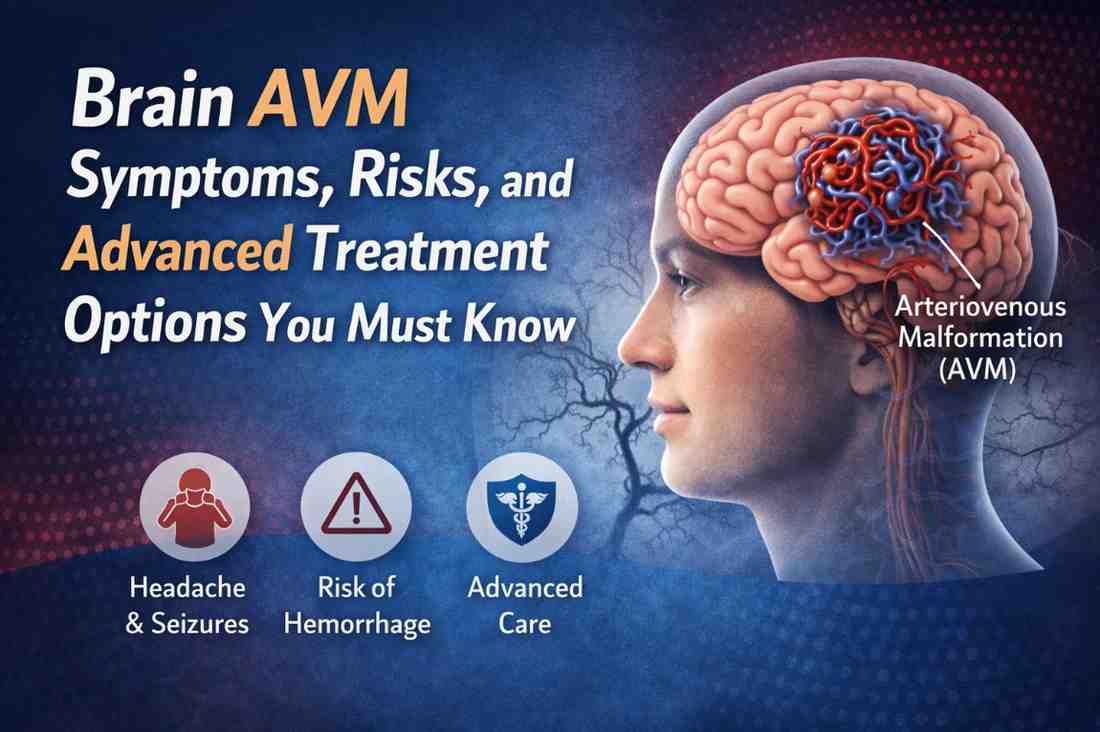
An arteriovenous malformation (AVM) is an abnormal tangle of blood vessels that disrupts the normal flow of blood between arteries and veins. While AVMs can occur anywhere in the body, those in the brain or spinal cord require urgent attention.
Early recognition and treatment are critical to preventing complications such as bleeding, neurological deficits, or stroke-like symptoms. Consulting an experienced Brain Surgeon in Vadodara ensures accurate diagnosis and personalized management for the best outcomes.
Understanding Arteriovenous Malformation (AVM)
AVMs are congenital but may not present symptoms until later in life. They are often discovered incidentally or after complications such as a brain hemorrhage.
Common symptoms include:
- Headaches
- Seizures
- Neurological deficits, like weakness or numbness
- Visual disturbances or difficulty speaking
Understanding the size, location, and severity of the AVM helps a Brain Surgeon in Vadodara determine the safest and most effective treatment approach.
Symptoms You Should Not Ignore
While some AVMs remain asymptomatic, persistent or worsening symptoms may indicate a high-risk AVM:
- Sudden or severe headaches
- Recurrent seizures
- Weakness, numbness, or tingling in limbs
- Vision changes or difficulty speaking
- Signs of neurological compromise
Early consultation with a Brain Surgeon in Vadodara can prevent life-threatening complications and improve long-term neurological health.
Diagnosis and Imaging
Accurate diagnosis is essential for effective AVM management:
- Clinical Examination: Neurological evaluation to assess deficits
- Imaging Studies:
- MRI & CT Scans: Map the AVM’s location and size
- Angiography: Provides a detailed view of blood flow and vessel structure
This ensures a personalized treatment plan that targets the AVM precisely while minimizing risks.
Treatment Options
Treatment is tailored based on the AVM’s size, location, and patient health:
- Surgical Resection
- Procedure: Complete removal of the AVM to eliminate the risk of rupture
- Benefits: Immediate resolution
- Risks: Infection, bleeding, or potential damage to surrounding tissue
- Endovascular Embolization
- Procedure: A catheter delivers a substance to block abnormal vessels, often before surgery or for smaller AVMs
- Benefits: Reduces AVM size and bleeding risk
- Risks: Temporary or permanent neurological symptoms
- Stereotactic Radiosurgery (SRS)
- Procedure: Focused radiation beams target the AVM, causing gradual shrinkage
- Benefits: Non-invasive with minimal recovery time
- Risks: Complete resolution may take months or years; small risk of radiation complications
- Observation
- Benefits: Avoids treatment risks if the AVM is small and asymptomatic
- Risks: Potential for sudden rupture
Advancements in Treatment
- Hybrid Techniques: Combining embolization with surgery or radiosurgery for better outcomes
- Advanced Imaging: Precise mapping allows targeted, safe interventions
A Brain Surgeon in Vadodara can leverage these modern techniques to ensure effective treatment and improved safety.
Post-Treatment Care and Recovery
Recovery and follow-up are essential to prevent recurrence and monitor neurological health:
- Regular Imaging: Ensures the AVM has been treated effectively
- Neurological Monitoring: Tracks improvements or emerging symptoms
- Lifestyle Adjustments: Avoid activities that increase rupture risk
- Long-Term Support: Rehabilitation for neurological deficits if present
Proper follow-up care ensures the best functional outcomes and long-term safety.
When to Consult a Brain Surgeon in Vadodara
Consult a specialist immediately if you notice:
- Severe or recurrent headaches
- Seizures
- Weakness, numbness, or loss of coordination
- Vision or speech disturbances
- Any sudden neurological changes
Early evaluation ensures timely intervention and reduced risk of complications.
Meet Dr. Vinay M. Rohra – Brain Surgeon in Vadodara
Dr. Rohra offers advanced neurosurgical care for AVMs and other brain conditions:
- Personalized treatment plans for surgery, embolization, or radiosurgery
- Minimally invasive surgical techniques
- Comprehensive post-treatment support and rehabilitation
Education & Experience:
- M.B.B.S., M.S., M.Ch (Neurosurgery) – Vadilal Sarabhai General Hospital, Ahmedabad
- Specialist in AVMs, brain tumours, and complex neurosurgical conditions
Patients trust Dr. Rohra for his expertise, precision, and patient-centered care.
Conclusion
Arteriovenous malformations can have serious neurological consequences if untreated. Early consultation with a Brain Surgeon in Vadodara ensures accurate diagnosis, effective treatment, and long-term safety.
Book an appointment with Dr. Vinay M. Rohra today to take control of your neurological health.
Frequently Asked Questions
Q1: What is an AVM?
An AVM is an abnormal tangle of blood vessels that disrupts normal blood flow between arteries and veins, most concerning in the brain or spinal cord.
Q2: What are the symptoms of a brain AVM?
Headaches, seizures, weakness, numbness, vision changes, or speech difficulties.
Q3: How are AVMs treated?
Treatment includes surgical resection, endovascular embolization, stereotactic radiosurgery, or observation, depending on AVM characteristics.
Q4: Can AVMs be treated without surgery?
Yes, small or asymptomatic AVMs may be monitored, and radiosurgery can be used for minimally invasive treatment.
Q5: When should I see a Brain Surgeon in Vadodara?
If you have headaches, seizures, neurological deficits, or any sudden changes in brain function, consult a specialist immediately.
Q6: Is follow-up necessary after AVM treatment?
Yes, regular imaging and neurological monitoring are crucial to ensure the AVM has been treated effectively and to prevent recurrence